
Introduction
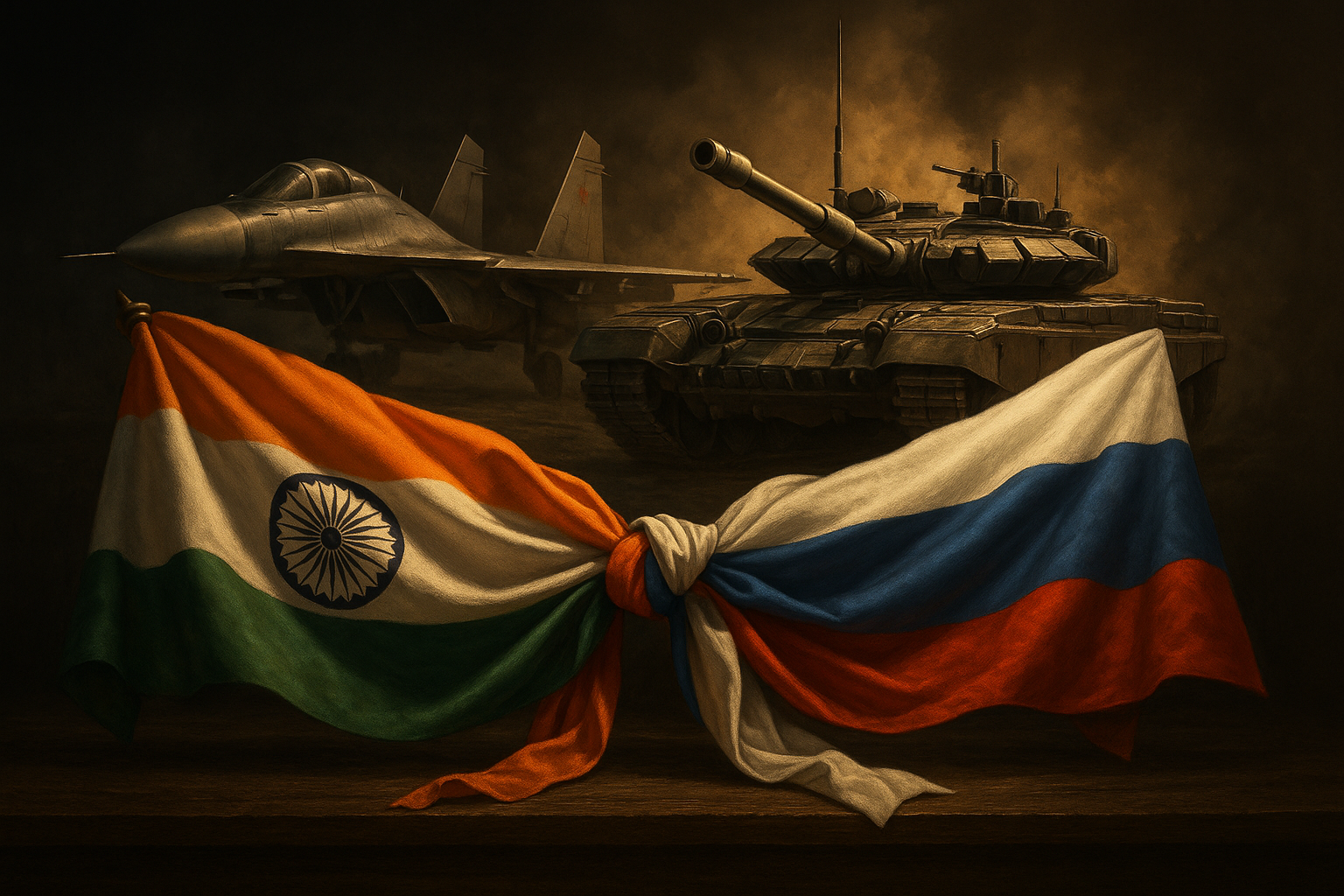
India, as a modern nation state, has shared a cordial relationship with the Soviet Union since its independence in 1947. During the Cold War era, the Soviet Union was India’s largest defence supplier, and the cooperation began in the 1960s. The beginning of the cooperation was marked by the acquisition of MiG-21 fighter jets in 1963. This further led to the extensive defence trade between the two countries.[1] After the takeover of Indira Gandhi as the Indian Prime Minister in the late 1960s, the relationship saw a new pace, especially the signing of the Indo-Soviet Treaty of Peace, Friendship and Cooperation in 1971 that solidified the strategic partnership between both nations. The Treaty signed in 1971 remained in effect even after the collapse of the Soviet Union in 1991. After the collapse of the Soviet Union, Russia remained India’s one of the largest defence partners in terms of defence supplies. The partnership gained momentum after 2000 and has seen diversification in procurement, joint production, and collaboration in research initiatives in technology. This paper investigates the trajectory of this partnership, its strategic implications, and prospects, particularly concerning the increasing involvement of the US in the Indian defence sector.[2]
The selection of this topic is driven by two major geopolitical developments which took place at the advent of the 21stcentury and influenced the Indo-Russian ties significantly. Firstly, in 1998, India tested nuclear devices through which India officially proclaimed itself as a nuclear power state, which transformed India’s strategic posture and emerged a need to have stronger defence ties with its key friends, including Russia. Secondly, in 2000, Vladimir Putin assumed the presidency of the Russian Federation, marking a new era in terms of Russian foreign and defence policy. Under President Putin’s leadership, Russia wanted to regain its Soviet legacy on the global stage, making India a key partner. All these developments laid the foundation for the formalization of the India-Russia Strategic Partnership through the signing of the India-Russia Declaration of Strategic Partnership in 2000.[3]
Literature Review
Several studies were conducted regarding the Indo-Russia defence as well as overall relations, rooted in historical ties that have evolved significantly over time. Several studies have investigated this strategic partnership through military cooperation, technology transfer, and geopolitical influence.
Ravi Kumar examines the strategic importance of Indo-Russian defence ties, emphasising India’s reliance on Russia in terms of weaponry due to its reliability, strategic trust, and affordability.[4] Similarly, Vikram Sharma laid more stress on the technology transfer and Russia’s role in make in India (indigenisation in defence) in defence manufacturing through government-to-government deals, licencing agreement, and joint ventures, like the BrahMos missile system.[5]
Pranav Ranjan delves deep into the aspect of military collaboration mechanisms, detailing joint military exercises like INDRA and naval collaborations that enhance interoperability between both countries’ navies. His research also shows India’s efforts to develop indigenous defence technologies with the collaboration of Russia.[6] Anil Verma’s research underscores the historical aspect of the Indo-Russia Defence partnership, like the signing of the Indo-Soviet Treaty of 1971. Despite some divergence of some policy issues, Russia remained the largest arms supplier, providing us with modern advanced equipment like the S-400 air defence system.[7]
Deepak Singh’s research mainly concerned India-Russia defence cooperation after 2000, technology transfers, and joint ventures. Pertinent examples are the licenced production of the Su30 MKI fighter jet in Hindustan Aeronautics Limited (HAL) and the 10-year leasing of the nuclear-powered submarine Chakra. All the above initiatives show the commitment of the Russian Federation to strengthening India’s domestic defence industry.[8]
Much research was conducted previously on the topic of India-Russia defence relations but primarily focused on technology transfer, joint ventures, military exercises, and collaboration in production. The research gap in all these studies is the limited focus on the political leadership’s role in fostering the defence relations between the two countries. This study aims to bridge this gap by analysing how the Leadership of both countries, be it Vladimir Putin and Dmitry Medvedev of Russia and Manmohan Singh and Narendra Modi of India, has influenced the defence collaborations. Furthermore, the paper explores how external geopolitical factors, particularly the increasing influence of the United States in India’s defence sector, have shaped the India- Russia defence relations.[9]
The main objective of this research is to examine the evolution of the India- Russia defence relations after 2000, with a specific focus on the role of the political leadership, key defence agreements, technology transfers and deals, and strategic cooperation. In addition, this paper aims to identify the challenges and prospects for this partnership, considering the changing global geopolitical dynamics and the growing role of the United States in India’s defence sector.[10]
Historical Background Of Indo-Russia Defence Ties
Since the independence of India in 1947, the Soviet Union has shared a rock-solid bond with India in terms of defence cooperation. Till the time of its disintegration and even after that, it remains India’s largest defence partner, providing advanced military weapons, training and technological support.[11] For example, during the 1960s-70s, India was supplied with weapons like MiG fighter jets, T-55 Tanks, and various naval platforms (Osa missile boats were prominent). The Indo-Soviet treaty of 1971 played a crucial role in shaping India’s defence policies, as it ensured that New Delhi had full support from Moscow during the Bangladesh Liberation War. After the disintegration of the USSR in 1991, India and Russia continued their engagements to strengthen the bilateral defence ties. For this, both nations signed the 1993 Treaty of Friendship and Cooperation and the 1994 Military-Technical Cooperation Agreement, strengthening their defence engagements.[12] However, it was after 2000 that India-Russia ties saw new heights and entered a new phase of collaboration.
India-Russia Strategic Partnership Declaration
A landmark event happened in 2000, which was that both India and Russia signed the Declaration of Strategic Partnership, marking a significant step in solidifying the bilateral relations.[13] The signing of this agreement laid the foundation for increased cooperation in the field of defence, which includes joint military exercises, arms trade, and technology transfers. The agreement facilitated the establishment of one important joint working mechanism, which was the India-Russia Inter-Governmental Commission on Military-Technical Cooperation (IRIGC-MTC). This body played an important role in defence procurements and joint projects.[14]
Since the declaration was signed, Russia has been one of India’s most trusted suppliers of defence equipment. This cooperation did not stop at procurement; it was further bolstered by joint research and development, production, and maintenance of defence equipment.[15] Another notable agreement was signed post-2000, the long-term military supply agreement, which helped the Indian Armed Forces to upgrade its existing systems and deepen engagements with the Russian navy in the Indo-Pacific region.
Role Of Political Leadership
As we know, building a strong relationship between two nations needs a strong will of the country’s leadership. During the last two and a half decades, there has been a huge change in both countries’ leadership. Firstly, in the Russian Federation, Vladimir Putin took over as president in 2000, but in 2004, the presidency shifted to Dmitry Medvedev. Similarly, in 2000, the prime ministership of India was with Atal Bihari Vajpayee. In 2004, Dr Manmohan Singh took over as prime minister, and in 2014, Narendra Modi succeeded Manmohan Singh and became the 14th prime minister of India. This study is going to focus on only Vladimir Putin and Dmitry Medvedev’s Administration on the Russian side and Dr. Manmohan Singh and Narendra Modi’s Administration on the Indian side.
Vladimir Putin (2000-08 And 2008- Present) And Dmitry Medvedev (2008-2012)
Under the leadership of Vladimir Putin, the defence relationship saw new heights, It was during his presidency that India and Russia signed the Strategic Partnership Declaration. His visit to New Delhi in 2000 resulted in several arms deals, which included the T-90 Tanks, Su-30 MKI fighter jets and Aircraft Carrier INS Vikramaditya.[16] These deals showed the level of trust between the two armed forces, and it created synergy and interoperability. During President Putin’s tenure, a new initiative was started, The Annual head of state Summit, where both countries’ heads of State meet each other. During the presidency of Medvedev, the Indo-Russia defence ties remained strong, and the main focus was on the strengthening of the existing agreements and enhancing the military cooperation. It was during his presidency that India leased a nuclear-powered attack submarine Chakra and received assistance in missile technology.
Manmohan Singh (2004-2014)
During Manmohan Singh’s tenure as the Prime minister of India, the defence ties of both countries saw a significant growth. Singh’s administration solidified the diplomatic and military ties through high-level summits, which ultimately led to the signing of multiple agreements. Key agreements signed were the joint development of the BrahMos supersonic Cruise Missile, the Leasing of the INS Chakra Nuclear submarine, and the modernization of the MiG-29 fighters.[17]Singh administration also played a crucial role in deepening strategic trust, leading to the signing of multi-billion dollar deals, including the Fifth Generation Fighter Aircraft (FGFA) project, which was later shelved due to disagreement between both countries.[18]
Narendra Modi (2014 – Present)
During Prime Minister Modi’s tenure, the relationship was further expanded by diversifying arms import and putting more emphasis on technology transfer. Under his leadership, India signed the deal of the S-400 Triumph air defence system, which significantly boosted the air defence capability.[19] Modi administration also promoted the “Make in India initiative”, Russia also helped in this initiative by setting up of joint ventures in defence manufacturing, such as the AK-203 assault rifle production and ka-226T helicopter manufacturing.[20] Modi administration has also pushed for greater self-reliance in defence, pushing for Russia’s participation in the domestic manufacturing of military equipment and reducing imports.
Joint Ventures And Technology Transfer
Whenever we see two countries’ defence relations, one of the critical aspects is the joint production and technology transfer. Some major projects of joint ventures between India and Russia are:
- BrahMos Missile System: A joint venture between India’s DRDO and Russian NPO Machinostroyeniya, BrahMos is one of the world’s fastest cruise missiles, with multiple variants deployed by the three branches of the Indian armed forces and also exported to a third country.[21]
- Sukhoi Su-30MKI: This fighter jet is based on the Russian Su-30 and further modified in collaboration with Hindustan Aeronautics Limited (HAL). This aircraft remains the backbone of the Indian Air Force. Over 270 units have been manufactured domestically under Russian licensing.[22]
- AK-203 Assault Rifles: A joint venture between India and Russia aims to manufacture over 750,000 AK-203 rifles for the Indian Armed Forces in Amethi, Uttar Pradesh.[23]
- INS Chakra (Nuclear Submarine): India leased Russian nuclear submarine under a strategic cooperation, through this Indian Naval power bolstered and give a second-strike capability. [24]
Indo-Russia Joint Military Exercises
India and Russia conduct multiple joint military exercises, which enhances interoperability, synergy and strategic coordination. Notable exercises are:
- Exercise INDRA (2003- present): A bilateral exercise between both nations; initially, it was a naval exercise, but now it includes all three branches of the Armed Forces.[25]
- Aviadarts: Russian-led aviation competition to improve aerial combat tactics in which Indian pilots participate.[26]
- TSENTR Exercise (2019): A Russian-led anti-terror exercise. India participated in it alongside China and other nations.[27]
Challenges And Future Prospects
India and Russia share a cordial relationship. Despite strong ties, some challenges are going to affect the trajectory of the ties. First and foremost, the US sanctions on the Russian Federation are going to affect the relations adversely; the pertinent example for this case is the diplomatic pressure created by the US government on India when India was purchasing the S-400 Triumph air defence system from Russia through the “Countering America’s Adversaries Through Sanctions Act (CAATSA)” and this threat increases after the Russia-Ukraine conflict, though there is new Trump administration wanted to resolve the issue of Russia-Ukraine.[28] Secondly, the growing bonhomie between the Russian Federation and the People’s Republic of China. The growing sale of advanced defence pieces of equipment like missile and aircraft systems poses a strategic threat to India’s relations with Russia.[29] Thirdly, the Indian initiative to diversify its defence procurements to maintain its policy of “Strategic Autonomy”.
The examples are the procurement of Rafale jets from France, missile defence systems from Israel, and the purchasing of MH-60R Seahawks and Apache helicopters from the United States. To reduce its dependence on Russia.[30] Lastly, the delayed projects and cost overrun turn out to be a major threat to the ties. Several Indo-Russia projects like the FGFA program and additional nuclear submarine lease have faced delays due to the cost overrun as well as the disputes over the issue of technology transfer.[31]
Looking at the future of the relationship, the major focus is going to be on the joint production of the defence arms with a huge emphasis on the technology transfer and increased importance of the indigenisation of armaments as India is pursuing its policy of “Atmanirbharta” (self-reliance). In the future, collaboration will expand in the fields of hypersonic weapons, artificial intelligence, space defence, and cybersecurity. This will secure India’s strategic edge over its adversaries. The role of the political leadership is going to be very important in how it will balance between the relations with Russia at the same time while having relations with western nations. However, this gives India a golden opportunity to balance its defence procurement strategy to avoid any kind of over-reliance on any single supplier while continuing its relationship with Russia.
Conclusion
India-Russia defence relations after 2000 have deepened, and the major role was played by the military trade, joint ventures, military exercises, and collaboration in the field of technology. A key factor in this has been the role of the political leadership. Every administration on both sides played a crucial role, be it the role of Vladimir Putin and Dmitry Medvedev in Russia and alongside Manmohan Singh and Narendra Modi all played a positive role in shaping defence agreements, advancing strategic ties, and fostering trust. Although there are challenges, such as the threat of US sanctions and India’s policy of diversifying its defence supplier, despite this, Russia remains a key partner. In the future, the focus will be more on balancing global ties while at the same time maintaining strong ties with Russia, sharing of technology, and collaboration in security issues.
References
[1] Sharma, A. (2020). Technology Transfers in India-Russia Defence Cooperation. Journal of International Affairs, 45(2), 112-130. Retrieved from https://www.journalofinternationals.com/tech-transfers
[2] Singh, K. (2014). Synergies in Indo-Russia Defence Cooperation Since 2000. Academia.edu. Retrieved from https://www.academia.edu/9622036/SYNERGIES_IN_INDO_RUSSIA_DEFENCE_COOPERATION_SINCE_2000
[3] Government of India. (2000). India-Russia Declaration of Strategic Partnership. Ministry of External Affairs. Retrieved from https://mea.gov.in/bilateral-documents.htm
[4] Kumar, R. (2021). Strategic significance of India-Russia defense relations: A contemporary analysis. International Journal of Defense Studies, 12(3), 45-60.
[5] Sharma, V. (2020). Technology transfers in Indo-Russian defense collaborations. Asian Journal of Security Studies, 14(2), 30-50.
[6] Rajan, P. (2019). India-Russia military cooperation: Mechanisms and impact. Defense and Security Review, 16(4), 78-95.
[7] Verma, A. (2022). Historical evolution of India-Russia defense relations. Global Security Journal, 20(1), 15-35.
[8] Singh, D. (2014). Synergies in Indo-Russian defense cooperation since 2000. Strategic Studies Quarterly, 9(2), 55-72.
[9] https://www.rusi.org/explore-our-research/publications/commentary/india-and-russia-ties-bind
[10] https://www.orfonline.org/research/india-russia-defence-cooperation-a-time-tested-relationship
[11] Chellaney, B. (2021). India-Russia Relations in a Changing World. Oxford University Press.
[12] Raghavan, S. (2019). The Evolution of India-Russia Defence Ties: A Historical Perspective. Cambridge University Press.
[13] Ministry of External Affairs, Government of India. (2023). India-Russia Defence Cooperation. Retrieved from www.mea.gov.in
[14] Singh, A. (2022). Geopolitical Implications of India-Russia Defence Relations. Brookings Institution.
[15] Russian Ministry of Defence. (2023). Annual Reports on India-Russia Military Cooperation. Retrieved from www.mil.ru
[16] Raghavan, S. (2019). The Evolution of India-Russia Defence Ties: A Historical Perspective. Cambridge University Press.
[17] Singh, A. (2022). Geopolitical Implications of India-Russia Defence Relations. Brookings Institution.
[18] Russian Ministry of Defence. (2023). Annual Reports on India-Russia Military Cooperation. Retrieved from www.mil.ru
[19] Chellaney, B. (2021). India-Russia Relations in a Changing World. Oxford University Press.
[20] https://capsindia.org/wp-content/uploads/2021/10/CAPS_Infocus_BSN_02.pdf
[21] Raghavan, S. (2019). The Evolution of India-Russia Defence Ties: A Historical Perspective. Cambridge University Press.
[22] [22] Ministry of External Affairs, Government of India. (2023). India-Russia Defence Cooperation. Retrieved from www.mea.gov.in
[23] https://www.idsa.in/publisher/issuebrief/ak-203-rifle-joint-venture-and-india-russia-defence-cooperation/
[24] Chellaney, B. (2021). India-Russia Relations in a Changing World. Oxford University Press.
[25] https://pib.gov.in/PressReleasePage.aspx?PRID=2116181
[26]https://www.rbth.com/news/2015/02/24/indian_pilots_to_participate_in_aviadarts_competition_in_august_41581
[27] https://pib.gov.in/PressReleasePage.aspx?PRID=1584258
[28] ps://www.cnbctv18.com/infrastructure/ndias-s-400-purchase-from-russia-could-trigger-caatsa-sanctions-biden-administration-8185481.htm
[29] Singh, A. (2022). Geopolitical Implications of India-Russia Defence Relations. Brookings Institution.
[30] Chellaney, B. (2021). India-Russia Relations in a Changing World. Oxford University Press
[31] Raghavan, S. (2019). The Evolution of India-Russia Defence Ties: A Historical Perspective. Cambridge University Press.


Leave a Reply